
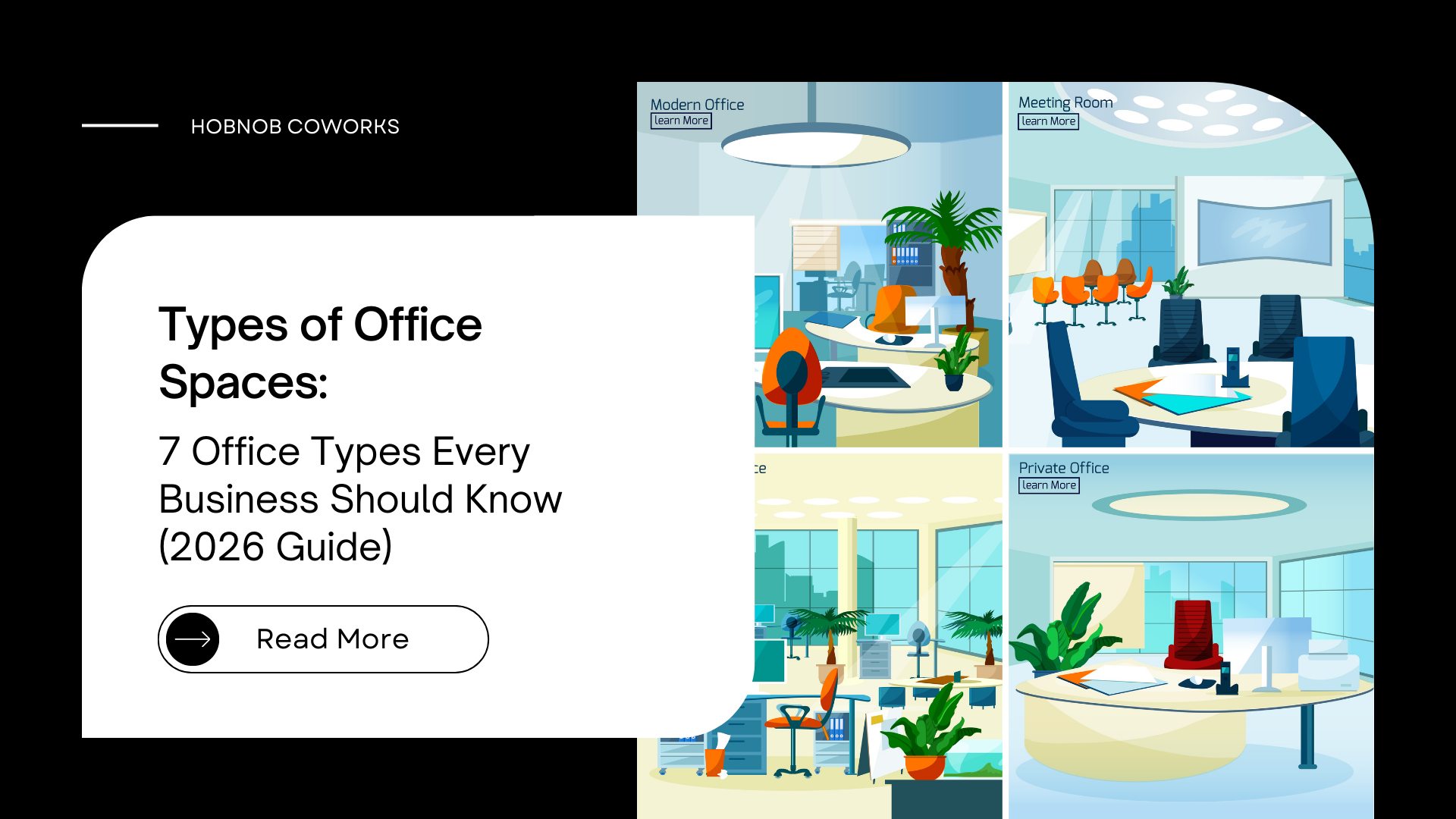
Choosing the right workspace can be confusing today because businesses have many types of office spaces to choose from. From traditional offices to coworking spaces and virtual setups, every option offers different benefits. Understanding these types of office environments helps businesses select the workspace that supports productivity and growth.
What Is an Office Space?
An office space is simply a place where people work, collaborate, and manage business activities. It usually includes desks, meeting rooms, internet access, and other tools required for daily operations.
Earlier, businesses depended mainly on fixed locations with long-term rental agreements. But as work styles evolved, several flexible types of office spaces emerged.
Today, companies evaluate different types of office environments before deciding which workspace suits their team, budget, and workflow.
Quick Comparison of Different Types of Office Spaces
| Office Type | Best For | Cost Level | Flexibility |
| Traditional Office | Large companies | High | Low |
| Coworking Space | Startups & freelancers | Medium | High |
| Virtual Office | Remote businesses | Low | High |
| Managed Office | Growing teams | Medium | Medium |
| Hybrid Office | Modern organizations | Medium | High |
This comparison helps businesses quickly understand how different types of office spaces compare with each other.
7 Types of Office Spaces
Let’s explore the most common types of office spaces businesses use today.
1. Traditional Office
Traditional offices are the workplace model most people are familiar with. A company rents or owns a dedicated workspace where employees work daily.
These types of office environments usually include private cabins, meeting rooms, and fixed workstations.
Advantages
- Complete control over workspace
- Strong company culture
- Higher privacy
Limitations
- High operational costs
- Long lease commitments
- Maintenance responsibilities
Because of these challenges, many startups now explore more flexible types of office environments.
2. Coworking Office
Coworking spaces are shared workplaces where professionals from different companies work in the same environment.
Over the last decade, coworking has become one of the fastest growing types of office spaces globally.
Coworking spaces usually provide:
- Ready-to-use workstations
- High-speed internet
- Meeting rooms
- Networking opportunities
For many startups and freelancers, coworking spaces eliminate the need to invest heavily in office infrastructure.
For example, workspace providers like Hobnob Coworks offer professional coworking environments where teams can start working immediately without worrying about office setup.
Pros
- Flexible membership plans
- Collaborative environment
- Lower setup costs
Cons
- Less privacy compared to private offices
- Shared workspace environment
Because of flexibility and cost efficiency, coworking is becoming one of the most preferred types of office solutions.
READ MORE – Coworking Space Meaning and full informantion
3. Virtual Office
A virtual office allows businesses to maintain a professional address without renting a physical workspace.
Among modern types of office options, virtual offices are considered one of the most cost-effective solutions.
Businesses can receive services such as:
- Professional business address
- Mail handling
- Call answering services
- Access to meeting rooms when required
Virtual offices are commonly used by freelancers, consultants, and remote companies.
READ MORE — Virtual Office vs Physical Office : Which Is Right for Your Business
4. Managed Office
Managed offices are fully serviced workspaces where infrastructure, maintenance, and utilities are handled by workspace providers.
This makes managed offices one of the most convenient types of office spaces for companies that want a private office without managing operational tasks.
Features
- Fully furnished offices
- IT infrastructure included
- Administrative support
- Flexible lease options
Managed offices are often used by growing companies that need professional workspaces quickly.
5. Hybrid Office
Hybrid offices combine remote work with physical office work. Employees can work from home on certain days and come to the office when collaboration is needed.
Among modern types of office setups, hybrid workspaces offer a balance between flexibility and teamwork.
READ ALSO – Hybrid Office Full Guide 2026
Benefits
- Reduced commuting
- Improved work-life balance
- Higher productivity
Hybrid models are becoming increasingly popular among companies that want to offer flexible work environments.
6. Shared Office
Shared offices are workspaces where multiple businesses operate from the same office location. Each company may have its own workspace while sharing facilities like meeting rooms and reception services.
These types of office spaces help businesses reduce operational costs while maintaining a professional work environment.
Shared offices are often used by startups and small businesses.
7. Home Office
A home office is a workspace created inside a residential property. With remote work becoming common, many professionals now prefer working from home.
Among all types of office setups, home offices provide the most flexibility.
However, working from home can sometimes reduce collaboration and productivity. Because of this, many remote workers occasionally work from coworking spaces when they need a more focused environment.
Real Example: How Startups Choose Office Spaces
Many startups begin with a small team working from home or cafes. As the business grows, the need for a more professional workspace becomes obvious.
Instead of investing heavily in traditional offices, many teams move to coworking environments where they can access meeting rooms, faster internet, and collaborative spaces.
Workspaces like Hobnob Coworks help startups and freelancers work in professional environments without the challenges of setting up a complete office.
How to Choose the Right Office Space
Choosing the right workspace depends on several practical factors.
Businesses should consider:
- Team size
- Budget
- Office location
- Infrastructure needs
- Flexibility requirements
By evaluating these factors, companies can select the most suitable types of office environment for their operations.
The Future of Office Spaces
Work culture continues to evolve. Businesses are increasingly moving toward flexible workspace solutions.
Experts believe that coworking environments, hybrid work models, and managed offices will dominate the future workplace landscape.
As companies continue experimenting with modern types of office setups, flexible workspaces are expected to become the standard choice for many organizations.
Conclusion
The workplace has changed significantly over the past few years. Businesses now have multiple workspace options depending on their team size, budget, and work style.
Understanding the different types of office spaces helps organizations choose environments that support productivity and long-term growth.
While traditional offices still exist, many businesses now prefer flexible solutions such as coworking environments, hybrid offices, and managed workspaces.
Platforms like Hobnob Coworks make it easier for startups, freelancers, and teams to access professional office infrastructure without dealing with the complexities of traditional office management.
FAQs
What are the main types of office spaces?
The most common types include traditional offices, coworking spaces, virtual offices, managed offices, shared offices, hybrid offices, and home offices.
Which office type is best for startups?
Coworking spaces are often the best option for startups because they provide flexible pricing, infrastructure, and networking opportunities.
What is the difference between coworking and traditional offices?
Traditional offices are rented or owned by a single company, while coworking spaces allow multiple professionals or businesses to work in a shared workspace.
Are coworking spaces cheaper than traditional offices?
Yes, coworking spaces are generally more affordable because businesses do not need to invest in office setup, furniture, or maintenance.
Why are coworking spaces becoming popular?
Coworking spaces are popular because they offer flexibility, collaboration opportunities, and professional work environments.
Follow Hobnob Coworking Space on Instagram for updates and Also in follow on Facebook.
